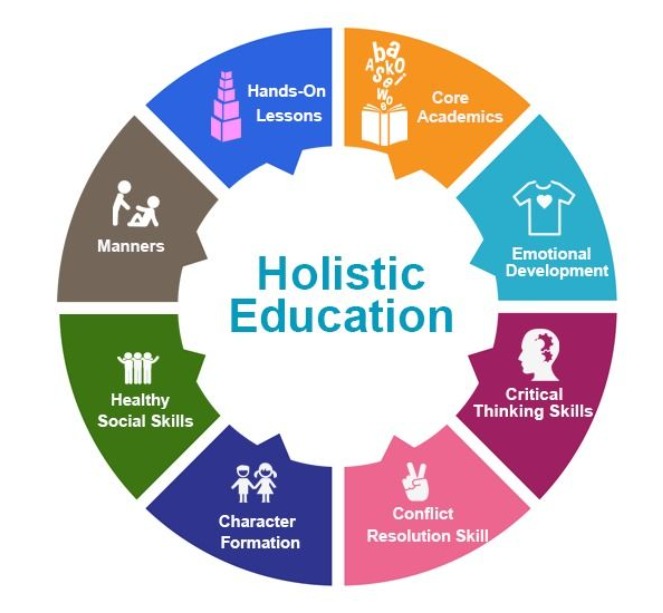
Practical Life (EPL): Practical Life Exercises are designed so the child can learn how to do living activities in a purposeful way. The aim is to help the child gain control in coordination of movement, independence, and adaptation to society. We follow the motto "Teach teaching, not correcting." These exercises aid the growth of the child’s intellect, concentration, and orderly thinking.
Sensorial: The purpose of Sensorial work is for the child to acquire clear, conscious information and to be able to make classifications in their environment. Sensorial exercises enhance every quality perceived by the senses such as size, shape, composition, texture, weight, and temperature.
Language: Learning language is done at the child's own rhythm. Montessori materials play an important role in aiding the child to develop powers of communication, expression, organization, and classification. The curriculum includes pre-reading visual exemplars that help every child understand others and express personal thoughts.
Mathematics: Little children are naturally attracted to the science of numbers. The Math curriculum includes counting, number recognition, and symbol/quantity matching. Children progress to understand mathematical concepts using manipulatives that expand their exploration of shape, size, symbol, and quantity.
Cultural Studies: Children explore the environment in increasingly complex ways. This area covers Geography, Science, Botany, Zoology, and History. Students are exposed to rhythm, songs, dance, movement, and art projects that reflect cultural celebrations.
Multiple Intelligence (MI): Our course is designed based on Dr. Howard Gardner’s theory. Intelligence is not just about what we know, but how we learn. It reflects our different ways of thinking and solving problems. In an MI view, everyone has all the intelligences; it’s just that each child has their own unique profile.
Bloom’s Taxonomy: This concept plays a vital role in designing our curriculum. It works in conjunction with learning activities to help every child expand critical thinking skills. It allows a child to think independently, solve problems, and evaluate alternatives. The levels include: Remembering, Understanding, Applying, Analyzing, Evaluating, and Creating.
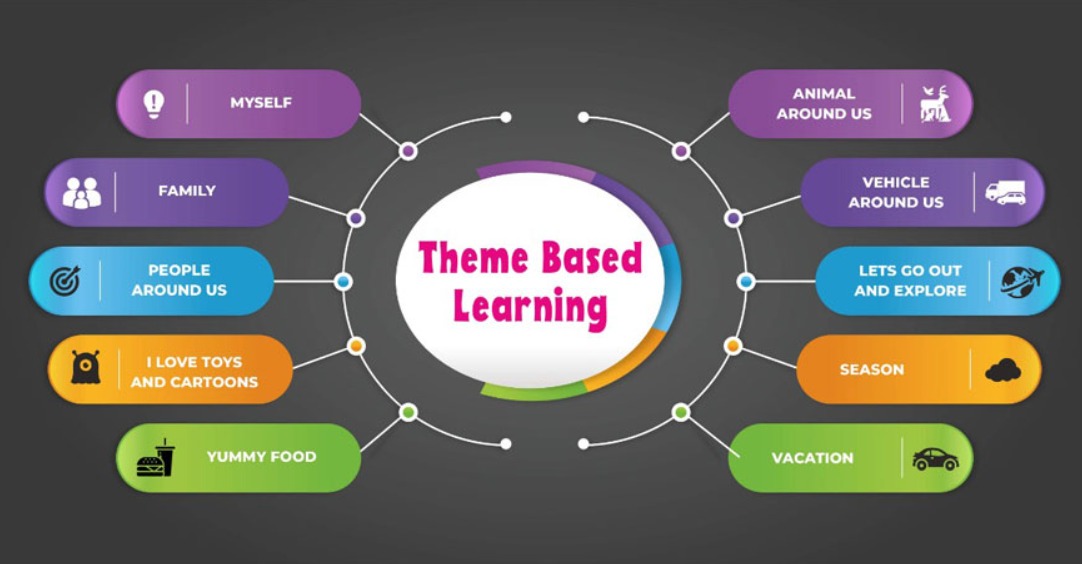
Theme Based Approach: This is a way of teaching whereby many areas of the curriculum are connected and integrated within a theme. Inspired by educational reformer John Dewey, our curriculum reflects real-life experiences to make learning meaningful.